000 Days 00 Hours 00 Min

Science Literacy for an Intelligent Society:
Opportunities, Challenges, and Transformations

Beijing, China · September 19–21, 2026

Guided By:
China Association for Science and Technology (CAST)


Organized By:
World Organization for Science Literacy (WOSL)
China Science and Technology Museum (CSTM)


Supported By:
United Nations Educational,Scientific and Cultural Organization (UNESCO)
International Science Council (ISC)
World Federation of Engineering Organizations (WFEO)


Co-organized By:
China Research Institute for Science Popularization (CRISP)
National Communication Center for Science and Technology, CAST
Chinese Association of Natural Science Museums (CANSM)

Agenda

All Day

Delegate Check-in

China Hall of Science and Technology
14:00-17:00

WOSL Member Assembly

By invitation only

China Hall of Science and Technology
09:00-09:45

Opening Ceremony

China Hall of Science and Technology
10:00-11:00

Keynote Speeches

China Hall of Science and Technology
11:10-12:00

High-Level Dialogue

China Hall of Science and Technology
14:00-17:00

Roundtable Forum: Science Literacy Empowering the Global Community

By invitation only

China Science and Technology Museum
14:00-17:00

2026 International Science Museum Capacity Building Workshop

By invitation only

National Communication Center for Science and Technology, CAST
14:00-17:00

The 2026 Center for China Science Popularization Forum
and the 32nd National Science Popularization Theory Symposium Plenary Session

China Hall of Science and Technology
All Day

Science Resources Fair

China Science and Technology Museum
Evening

Science Night (Cocktail Reception)

By invitation only

China Science and Technology Museum
09:00-11:30

Thematic Forum – Future Science Education

China Science and Technology Museum
09:00-11:30

Thematic Forum – Public Science Communication

China Science and Technology Museum
09:00-11:30

Thematic Forum – School Without Walls

China Science and Technology Museum
09:00-11:30

Thematic Forum – Building a New Science Popularization Ecosystem

China Science and Technology Museum
09:00-11:30

2026 China-Russia Science Literacy Promotion Salon

Heilongjiang Sub-venue
09:00-11:30

The 2026 Center for China Science Popularization Forum
and the 32nd National Science Popularization Theory Symposium Plenary Session

China Hall of Science and Technology
11:30-12:00

Closing Ceremony

China Science and Technology Museum
Afternoon

Science Culture Workshop

By invitation only

Off-site Venues

Speakers

Guest Name

Science and Technology
Bio coming soon

Guest Name

Education
Bio coming soon

Guest Name

Museum
Bio coming soon

Guest Name

Industry
Bio coming soon

Guest Name

International Organizations
Bio coming soon

The guest list will be continuously updated. Please stay tuned.

Call for Papers

Centered around the conference's core themes, this call for papers primarily seeks original research with innovation, practical value, or policy implications. Papers will undergo blind peer review by expert panelists. Accepted papers will be included in the official conference proceedings (to be published after the conference), and authors of outstanding papers will be invited to present at related conference sessions.

Submission Deadline: July 30, 2026

Conference Topics

In response to the wave of the intelligent technology revolution and common global development challenges, and in alignment with the UN Decade of Science for Sustainable Development, this topic explores the new opportunities, systemic challenges, and deep-level transformation pathways for enhancing public science literacy in an intelligent society.

Topics for submission include but are not limited to:

  • Assessment frameworks and indicator systems for public science literacy in an intelligent society
  • Opportunities and systemic challenges for improving science literacy in the AI era
  • Pathways and cases of science literacy empowering the Sustainable Development Goals
  • Science literacy policies and practices from a cross-national comparative perspective
Focusing on the impact of artificial intelligence and emerging technologies on science education, this topic explores how AI reshapes science curriculum and teaching, promotes teacher professional development, and optimizes understanding of learning processes.

Topics for submission include but are not limited to:

  • AI-enabled science curriculum design and innovative teaching models
  • Science teacher professional development and capability reconstruction in the intelligent era
  • Learning analytics and personalized learning applications in science education
  • Empirical research on emerging technologies (VR/AR, generative AI, etc.) in science education

Exploring how to break down barriers between research institutions and the public, promote the transformation of science and technology resources into science communication content, and share innovative cases and effective pathways for public science communication by research institutions.

Topics for submission include but are not limited to:

  • Public engagement practice models and effectiveness evaluation by research institutions
  • Transformation mechanisms and typical cases for the science popularization of science and technology resources
  • Capacity building and incentive policies for scientists engaging in science communication
  • Application strategies for social media and emerging platforms in science communication

Focusing on the mission and development direction of science museums and science centers in the context of an intelligent society, this topic explores how science museums can deepen the integration of exhibitions, education, and research, and build innovative mechanisms for multi-stakeholder collaboration and shared science resources.

Topics for submission include but are not limited to:

  • Innovative practices integrating exhibitions, education, and research in science museums
  • Intelligent technology empowering interactive experiences and learning design in science museums
  • Science museums as community science learning hubs: multi-stakeholder collaboration mechanisms
  • Cross-institutional cooperation models for co-building and sharing science resources

Focusing on building social collaborative mechanisms for science popularization, sharing typical cases of social mobilization and public welfare fund support, and exploring how to build a sustainable new ecosystem of science popularization facilities and resource networks.

Topics for submission include but are not limited to:

  • Mobilization mechanisms and policy support for social forces participating in science popularization
  • Models and cases of public welfare funds and social capital empowering science popularization
  • Construction of science popularization facilities and resource networks under market-oriented operation
  • Collaborative innovation among government, industry, academia, and research in building the science popularization industry ecosystem

Partner Journals

Special issues in partnership with relevant journals will be announced in due course.

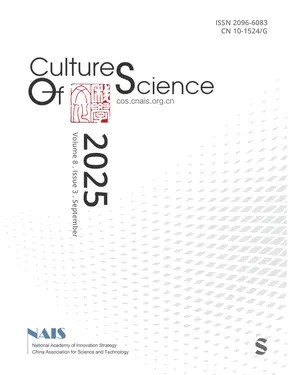
Cultures of Science journal cover
Cultures of Science

Cultures of Science is a peer-reviewed international Open Access journal. The journal aims at building a community of scholars who are expecting to carry out international, inter-disciplinary and cross-cultural communication. The topics include: cultural studies, science communication, the history and philosophy of science and all intersections between culture and science. The journal values the diversity of cultures and welcomes manuscripts from around the world and especially those involving interdisciplinary topics.

It welcomes research articles, commentaries or essays, and book reviews with innovative ideas and shedding a fresh light on significant issues. Research articles report cutting-edge research developments and innovative ideas in related fields; commentaries provide scientific perspectives on emerging topics or social issues; book reviews evaluate and analyze the contexts, styles and merits of published works related to cultures of science.

The topics explored include but are not limited to: science communication, history of science, philosophy of science, sociology, social psychology, public science education, public understanding of science, science fiction, political science, indicators of science literacy, values and beliefs of the scientific community, comparative study of cultures of science, public attitudes towards a new scientific and technological phenomena.

Registration

Registration Notice

  1. Registration information must be lawful, truthful, and accurate, with all necessary authorizations obtained.
  2. Please carefully read and agree to the Privacy Policy before submitting your information.
  3. If you do not agree to the relevant terms, please do not submit your registration.
  4. Submission indicates that you have the legal capacity to register and participate in the conference.
  5. Review results will be notified via email, SMS, or phone.

Conference Venue Information

The main conference venues are China Hall of Science and Technology, China Science and Technology Museum, and National Communication Center for Science and Technology, CAST. Each venue has clearly defined functions and comprehensive supporting facilities.

China Hall of Science and Technology

Address: No.3, Fuxing Road, Haidian District, Beijing

Dates: September 19–20

Planned Events: WOSL Member Assembly, Opening Ceremony, Plenary Sessions, China Science Popularization Think Tank Forum Plenary Session, and other core meetings.

China Science and Technology Museum

Address: No.5 Beichen East Road, Chaoyang District, Beijing China

Dates: September 20–21

Planned Events: Science Resources Fair, Thematic Forums, Roundtable Forum on Science Literacy Empowering the Global Community, Science Night, Closing Ceremony, and more.

National Communication Center for Science and Technology, CAST

Address: No.3 Beichen East Road, Chaoyang District, Beijing China

Date: September 20

Planned Events: 2026 International Science Museum Capacity Building Workshop.

Transportation Note: All venues are located in the core area of Beijing. Specific routes will be provided in the conference confirmation notice.